Rotor
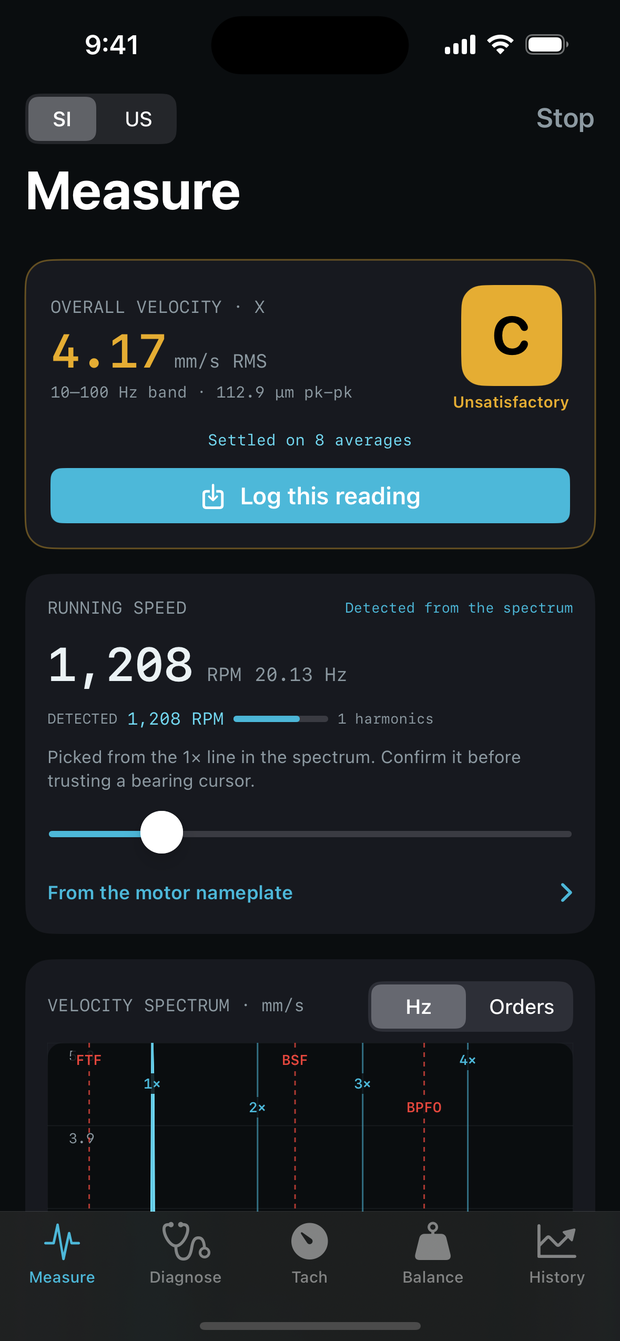
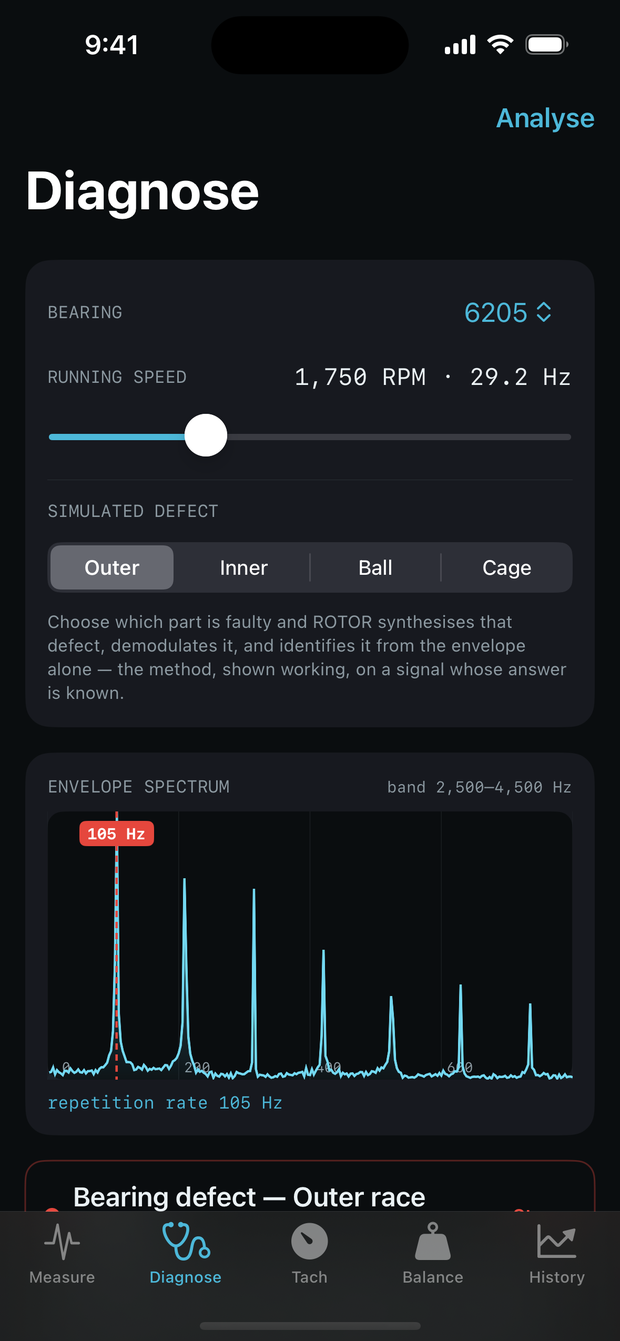
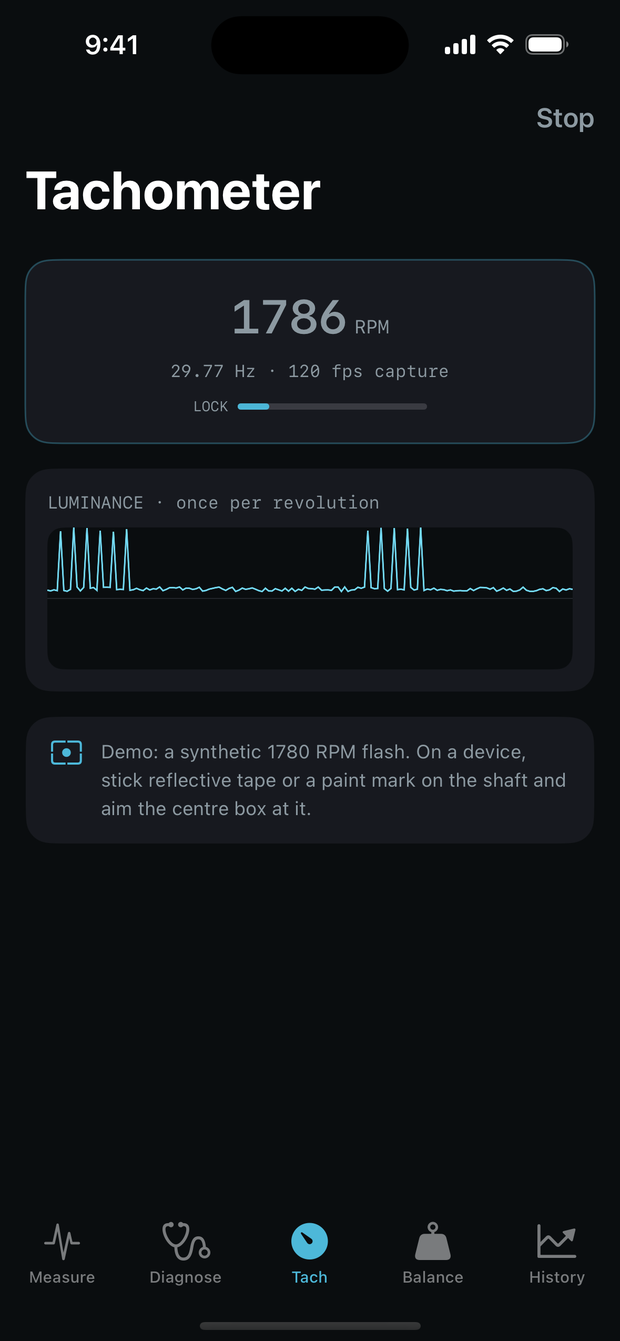
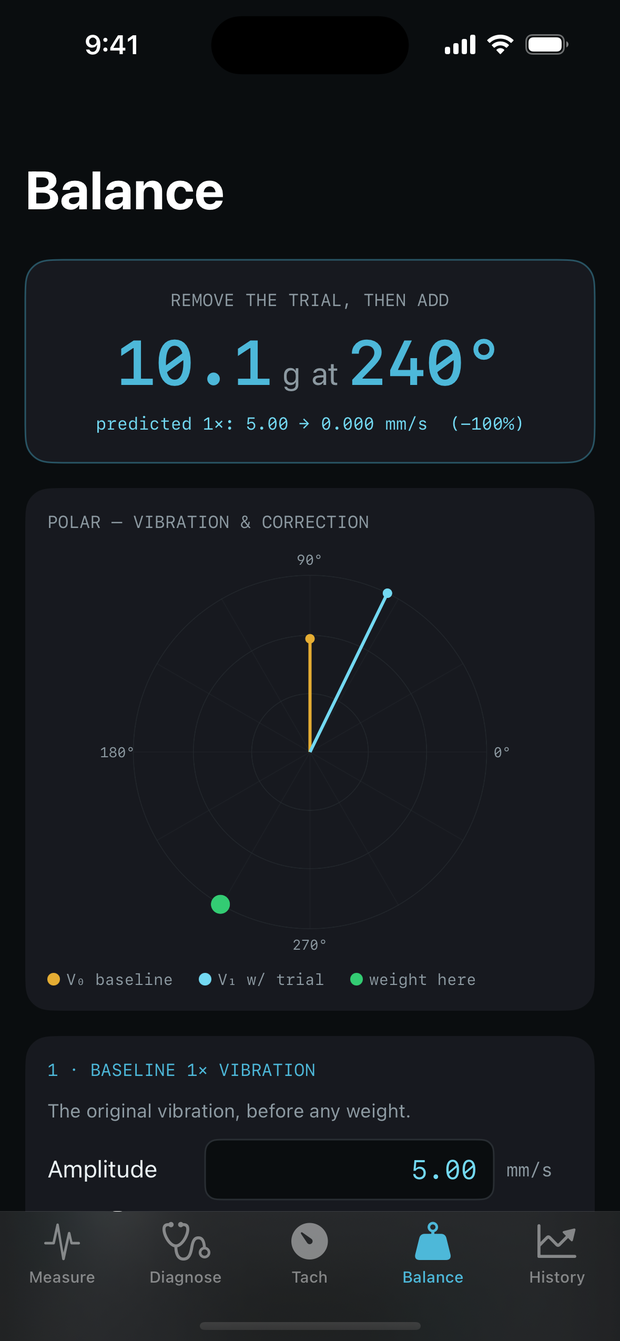
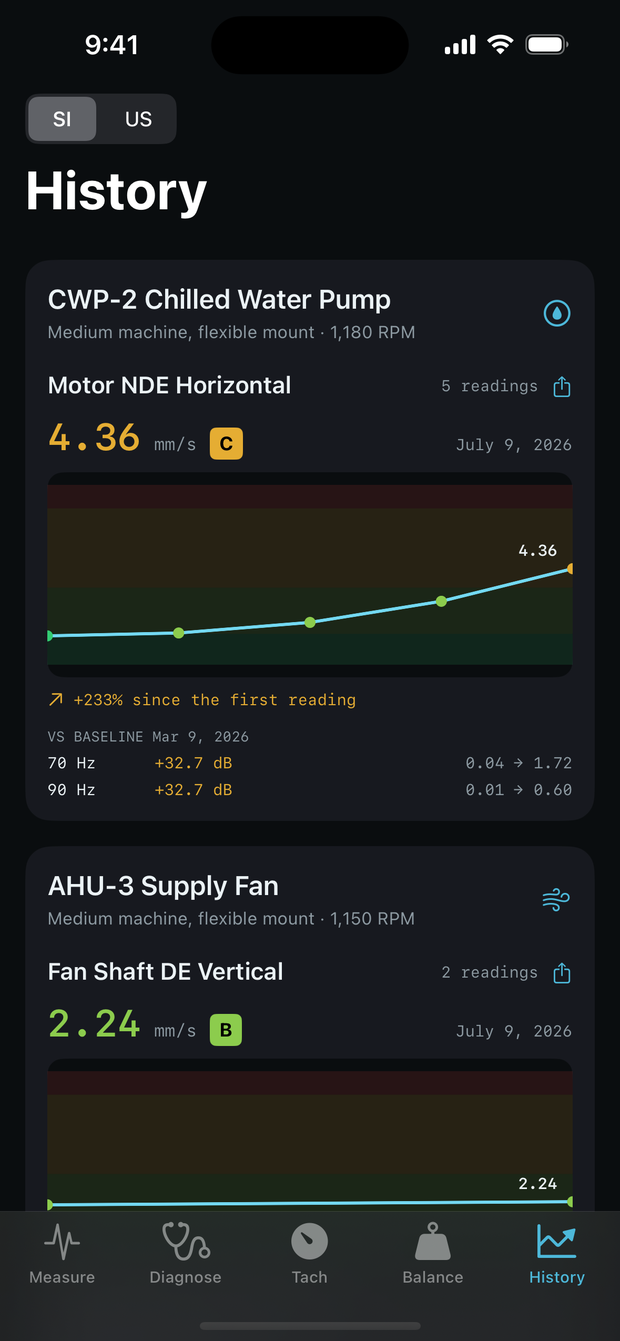
Rotor turns your iPhone into a working vibration analyser. Hold it against a running motor, pump, fan or gearbox and read the overall velocity in mm/s RMS, graded A to D against ISO 20816 with the machine class cited. Then it names the fault and shows you why: unbalance, misalignment, looseness, blade and vane pass, gear mesh with sidebands, belt defects and electrical faults at twice line frequency, each quoting the lines it came from and the specific next step. Acceleration is integrated to velocity in the frequency domain rather than cumulative-summed in the time domain, and the graded overall is Parseval-exact, which is why the numbers hold up. A built-in self-test runs a signal whose answer is known analytically and shows measured against expected. Log readings and the trend line shows a machine crossing out of green over months, compared against its own baseline. Envelope demodulation names a failing bearing, and single and two plane field balancing solves the correction weight and angle. Rotor is also honest about the limits: the built-in accelerometer reaches about 100 Hz, and the app says so at the moment it matters instead of letting a flat spectrum look like a healthy bearing. Everything runs on device with no account, no cloud and no network access.